Choose a split system when you mainly need to heat or cool one room or living area. Consider ducted reverse-cycle when you want several rooms served by a central system and your home can accommodate the ductwork. For multiple rooms with limited outdoor space, a multi-split is another option worth comparing. The right choice depends on the rooms you use, the building layout and the complete installed quote—not simply the number of bedrooms.
Picture your usual evening: the living room is occupied, someone is working in a study, and the bedrooms will only be used later. Do all those spaces need heating or cooling together? Answering that question is a useful starting point before comparing equipment.
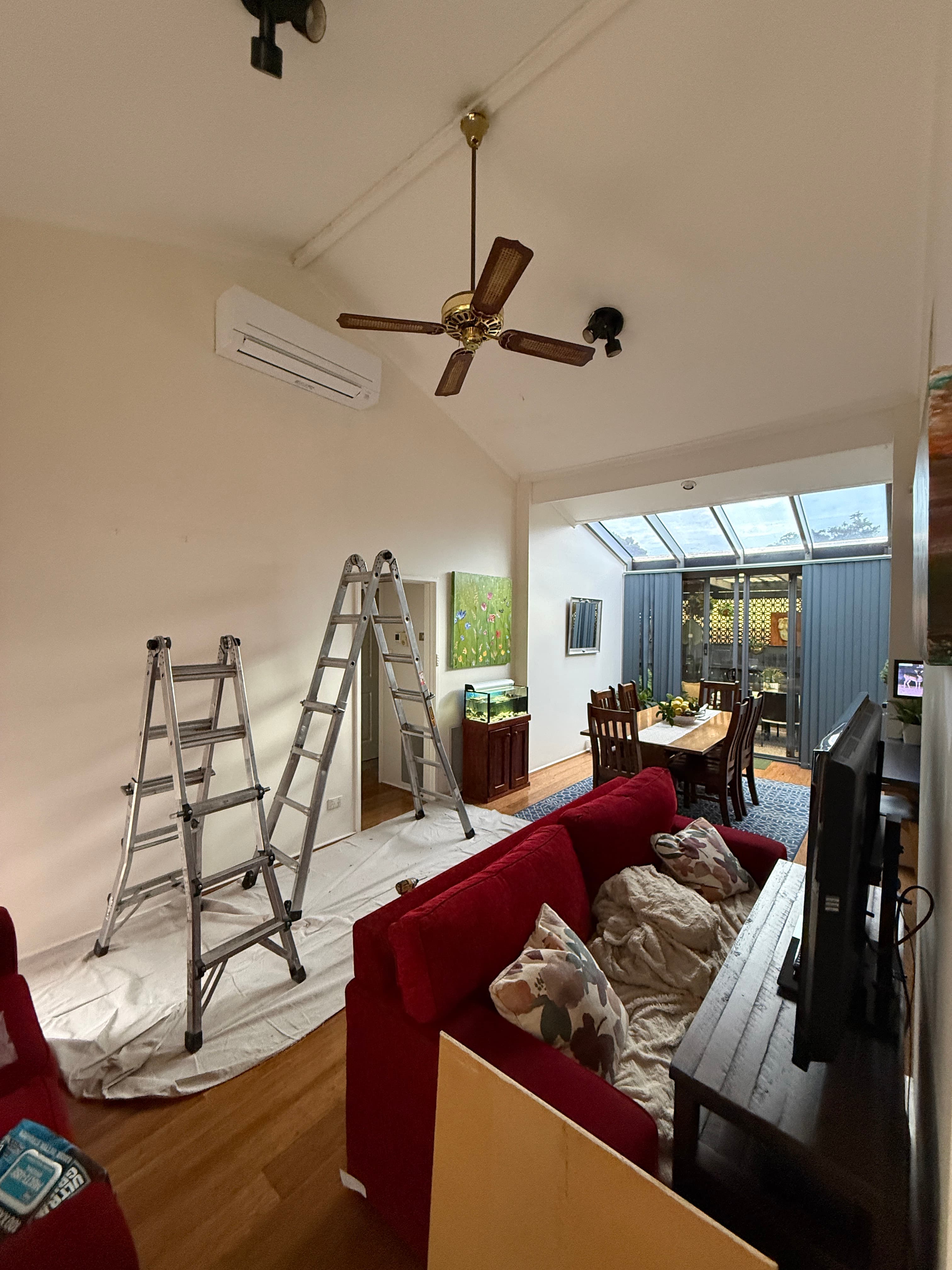
For homes in Glen Huntly, Bentleigh, Moorabbin and surrounding Melbourne suburbs, this guide explains the main differences and the questions to ask before installation. Wall-mounted indoor air-conditioning unit during installation. Photo supplied by LDS Air & Electrical.
Ducted, split and multi-split: what is the difference?
A single split system connects one indoor unit to one outdoor unit. In this comparison, “split system” means a non-ducted room system, usually wall-mounted. Technically, ducted equipment can also have a split indoor/outdoor arrangement.
A ducted reverse-cycle system distributes heated or cooled air through ducts to outlets in different rooms. A multi-split connects several indoor units to one outdoor unit. Reverse-cycle describes the ability to heat and cool; it is not another name for ducted. These configurations are explained in the Australian Government's heating and cooling guide.
| Question | Single split system | Ducted reverse-cycle | Multi-split |
|---|---|---|---|
| What spaces does it serve? | A selected room or connected area | Multiple rooms through a duct network | Multiple rooms through separate indoor units |
| What is visible inside? | Usually a wall-mounted unit | Supply outlets and a return-air grille | An indoor unit in each selected space |
| What should be checked first? | Unit position and room requirements | Space for equipment, ducts and return air | Indoor-unit combination and outdoor-unit capacity |
| How should I compare quotes? | Include every room you need covered | Include the proposed outlets and controls | Include every indoor unit and its controls |
When is a split system a sensible starting point?
Put a single-room split on your shortlist if your main problem is a hot living area, an uncomfortable bedroom or a study you use during the day. Ask the installer to show which space the proposed unit is intended to serve.
If bedrooms are part of the brief, include them in the plan rather than assuming a living-room unit will make the whole house comfortable. Daikin's multiple-room guidance identifies separate split systems, multi-splits and ducted equipment as alternatives to compare.
For example, if you want a living area comfortable in the afternoon and one bedroom comfortable overnight, request a quote that explicitly addresses both uses. That is a more useful comparison than asking only for “an air conditioner for a three-bedroom house”.
When should you consider ducted air conditioning?
Ducted deserves a closer look when the brief includes several occupied rooms and you prefer outlets rather than a wall unit in each space. Ask to see the proposed layout before choosing the equipment: where will the indoor unit, ducts, outlets and return-air grille go?
The Australian Government's YourHome guide explains that ducted performance depends on duct design, insulation, sealing and an effective return-air path. A central unit alone does not determine the result.
LDS's ducted air conditioning and heating installation page is the relevant next step if you want to discuss whether that layout is practical for your property.
What does zoning actually give you?
Zoning lets selected areas receive conditioned air instead of treating the whole home as one space. Daikin's zoning explanation describes grouping bedrooms and living areas separately using the relevant controller and dampers.
Before accepting a quote, ask:
- Which rooms are grouped together?
- What control does each zone have?
- What operating restrictions apply to this particular design?
- Is the quoted controller included in the price?
Do not treat the word “zoned” as a complete specification. Ask the installer to demonstrate how your proposed setup will work during the day and overnight.
Is multi-split the middle option?
A multi-split can be worth considering when you want several indoor units connected to one outdoor unit. Daikin's multi-split product guide highlights room-by-room control and applications where outdoor space is limited.
Ask which indoor units can run together, how the proposed combination meets their loads, and whether its controls suit your household. Independent temperature settings do not necessarily mean simultaneous heating and cooling: Daikin states that its residential multi-splits operate in either heating or cooling mode at one time. Check the restrictions for the exact model being quoted.
If you want to see an existing local example, LDS's Ashburton air conditioning installation project describes a residential multi-unit installation. It is an example of completed work, not a price guide or a specification for your home.
Which is cheaper to install and run?
Compare systems covering the same rooms, under the same usage assumptions. A quote for one living-room unit and a quote for whole-home ducted air conditioning are buying different outcomes.
For installation, ask for an itemised scope rather than relying on a generic online price. Use this checklist to make the quotes comparable:
| Item to clarify | Question to ask |
|---|---|
| Coverage | Exactly which rooms does this proposal serve? |
| Equipment | What are the indoor and outdoor model numbers? |
| Controls | Which controllers and zoning components are included? |
| Installation work | What pipework, drainage, cabling and access work is included? |
| Electrical work | Has the existing supply and installation been assessed? |
| Finishing and removal | Who handles making good and removing old equipment? |
| Total price | Does the total include GST and every stated item? |
For running costs, there is no reliable universal hourly price for every Melbourne home. Your electricity tariff and operating pattern matter, alongside the equipment and building. The Energy Rating label guide helps you compare heating and cooling performance for the relevant climate zone; compare suitable capacity classes rather than star counts alone.
Wall-mounted systems avoid duct-distribution losses. Ducted systems can target occupied areas through suitable controls, but ductwork and fan operation still affect efficiency. The government's heating and cooling guidance explains why non-ducted and ducted performance differ. Ask for the assumptions behind any saving estimate rather than accepting a guaranteed percentage.
What should an installer check at your home?
Bring a floor plan if you have one, plus a list of the rooms you want comfortable and when you use them. Ask the installer to assess the room requirements, suitable unit positions, access, electrical work and the route for the installation.
Also discuss the outdoor unit's position early. EPA Victoria notes that air-conditioner noise can disturb neighbours, particularly when equipment is loud or close to neighbouring properties. Ask how the proposed location addresses nearby bedrooms and homes.
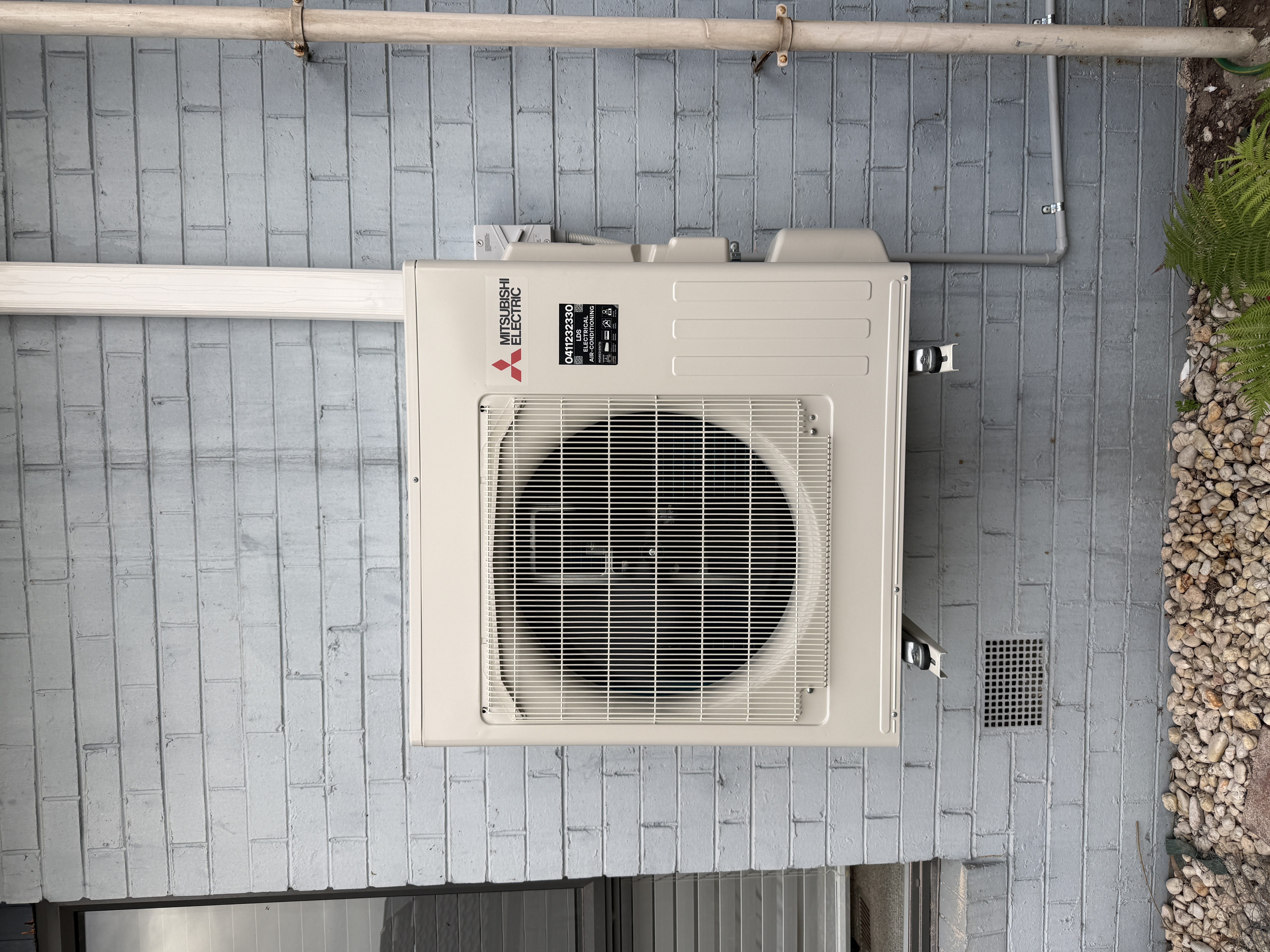
Outdoor Mitsubishi Electric air-conditioning unit with LDS branding. Photo supplied by LDS Air & Electrical.
If your property is rented or part of an owners corporation, establish the permissions needed for your proposed work before committing. For refrigerant work, check that the technician's licence covers the task; the Australian Refrigeration Council lists licence types and their scope.
Frequently asked questions
Is ducted always better for a three-bedroom house?
No. Start with which rooms you want conditioned, when you use them and whether the proposed installation fits the building. Ask for alternatives that meet the same brief.
Can a split system heat as well as cool?
Yes, if it is a reverse-cycle model. Cooling-only units also exist, so check the actual model rather than assuming every split provides heating.
Can I get several rooms conditioned without ducts?
Yes. Separate split systems or a suitable multi-split arrangement are options to discuss. The proposed equipment must be selected for the rooms and how they will be used together.
Should I replace an existing split system with ducted?
First establish what you want to change: a fault, an uncomfortable room or whole-home coverage. If the issue is poor cooling, use our air conditioner not cooling guide before treating replacement as the only answer.
What should I send when requesting a quote?
Send your suburb, the rooms you want covered, any existing equipment details, a floor plan if available, and photos of possible indoor and outdoor locations. Explain your main priority: one-room comfort, several bedrooms, whole-home coverage or replacing an existing system.
Compare options for your Melbourne home
LDS Air & Electrical is based in Glen Huntly and provides electrical and air conditioning services across Melbourne's eastern and south-eastern suburbs. You can explore our air conditioning installation service or request a quote to discuss your property.
Call 0411 232 330 and tell us which rooms you want comfortable and when you use them. That gives the conversation a practical starting point, whether the eventual recommendation is split, multi-split or ducted.