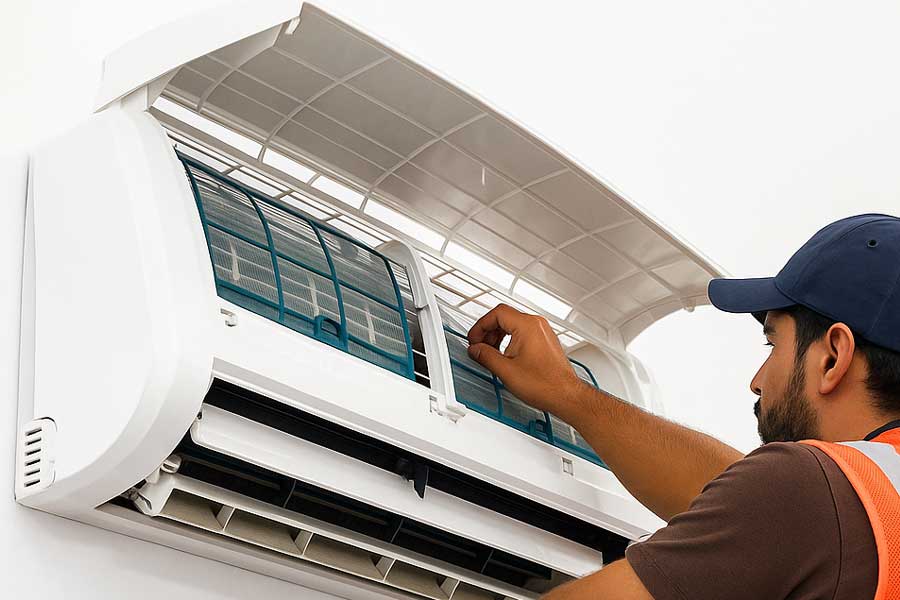
When your split system or multi-head air conditioner suddenly stops blowing cold air, rattles loudly, or trips the safety switch on a hot Melbourne afternoon, booking a professional diagnostic visit is the best first step.
Many homeowners hesitate to call a technician without knowing what to expect on-site, how pricing works, or whether they will be pushed into an expensive repair.
At LDS Air & Electrical, we believe in straightforward, transparent service. In this guide, we walk you through the entire air conditioning diagnostic process in plain language—explaining what the technician checks, how diagnostic fees work, how repair quotes are approved, and what happens if replacement parts are needed.
1. Upfront Pricing: How the Diagnostic Callout Works
A professional diagnostic visit provides an accurate, on-site assessment rather than guesswork over the phone. For residential air conditioners across Melbourne, diagnostic visits operate on a clear, upfront callout structure:
- Standard Diagnostic Callout: $180 (inc. GST)
- What it covers: Travel to your Melbourne property, dedicated testing time on-site, systematic fault-finding across electrical and refrigeration components, and a clear written quotation detailing recommended repairs.
- No surprise charges: The diagnostic fee covers finding the cause of the problem. If an immediate minor adjustment can be completed safely within the visit (such as clearing a simple filter blockage or resetting a tripped safety switch), the technician will explain this right away. If replacement components or extensive repairs are required, we provide a fixed written quote for your approval before any repair work begins.
If your system is running but not cooling effectively, you can also review our guide on Air Conditioner Not Cooling? When to Service, Repair or Replace It for basic homeowner troubleshooting.
2. What the Technician Checks On-Site
Finding the root cause of an air conditioner failure requires checking both electrical connections and refrigeration pipework. Dual-trade qualifications (Licensed Electrician REC 36349 + ARC Refrigerant Handling Licence) ensure every test is completed safely:
A. Electrical Supply & Safety Controls
- Power Supply & Safety Switches: Checking voltage supply at your switchboard, verifying dedicated circuit breakers, and ensuring the outdoor weatherproof isolator switch is working safely.
- Electrical Startup Components: Testing electrical contactors, relays, and startup components to ensure the compressor and fan motors receive correct power without tripping your switchboard.
- Control Boards & Error Codes: Reading digital fault codes from the indoor and outdoor control boards to identify sensor or communication errors.
B. Refrigerant Levels & Leak Checks
- Operating Pressures: Connecting specialized pressure gauges to verify that refrigerant pressures match the manufacturer specifications for your system (such as R32 or R410A).
- Leak Detection: If refrigerant levels are low, Victorian environmental regulations require locating and fixing the leak point before any gas can be added.
- Pipework & Insulation: Inspecting copper pipe connections and exterior insulation foam to prevent energy loss and identify any signs of oil residue from leaks.
C. Airflow, Coils & Fan Performance
- Indoor Filters & Coils: Checking for dust buildup or blocked filters that restrict airflow across the indoor evaporator coil.
- Fan Motors & Bearings: Ensuring the outdoor condenser fan and indoor barrel fan spin quietly without bearing noise or motor strain.
- Heating & Cooling Operation: Verifying that the internal reversing valve shifts smoothly between cooling and reverse-cycle heating.
D. Condensate Drainage Inspection
- Checking the indoor drain tray and gravity drainage hose for blockages, mold, or insect nests that can cause indoor water dripping down your walls.
3. Instant Adjustments vs. Quoted Component Repairs
During the diagnostic inspection, findings generally fall into two categories:
Immediate Adjustments
Simple issues such as dirty sensor contacts, surface coil blockages, or minor drainage line flushes can often be addressed on the spot during the diagnostic visit.
Required Replacement Parts
If a major component has failed—such as an outdoor inverter board, compressor, indoor fan motor, or electrical safety switch—the technician will:
- Identify the exact model number, serial number, and required replacement part.
- Prepare a clear, fixed-price written quote detailing parts and labour.
- Discuss whether repairing the unit is cost-effective compared to installing a new energy-efficient system.
4. Written Quote Approval Before Any Work Begins
You are always in control of the decision. No repairs or parts replacements proceed without your explicit approval.
The technician will explain:
- What Failed: Plain-English explanation of why the component stopped working.
- Your Options: Whether the part can be replaced economically, or if the system's age (e.g. 10–15 years on older refrigerants) makes a new split system a better long-term investment.
- The Total Price: Fully inclusive fixed quote with no unexpected additions.
If you choose not to proceed with a major repair on an older system, you only pay the agreed standard diagnostic fee.
5. Parts Sourcing & Timelines
Our service vehicles carry common electrical and maintenance supplies.
For brand-specific manufacturer parts (such as genuine Daikin, Mitsubishi Electric, Panasonic, or ActronAir electronic boards and motors):
- Standard residential parts available through Melbourne trade suppliers are typically sourced within 24 to 48 hours, subject to distributor stock.
- We then schedule a prompt follow-up visit to fit the part and test the system under load.
6. Testing, Handover & Certification
Once any repair is completed:
- The technician runs the air conditioner through cooling and heating cycles to confirm steady operation and rapid temperature change.
- Operating current is checked with safety meters to verify normal electrical draw.
- Where electrical circuit modifications are carried out, an official Certificate of Electrical Safety (COES) is supplied in line with Energy Safe Victoria standards.
- Your repair is backed by professional workmanship standards.
Book Your AC Diagnostic Visit Today
If your air conditioner is blowing warm air, making grinding noises, or tripping your power, prompt diagnosis prevents further damage.
Explore our dedicated Air Conditioner Repair Services or contact LDS Air & Electrical on 0411 232 330 to arrange a transparent diagnostic visit across Melbourne.